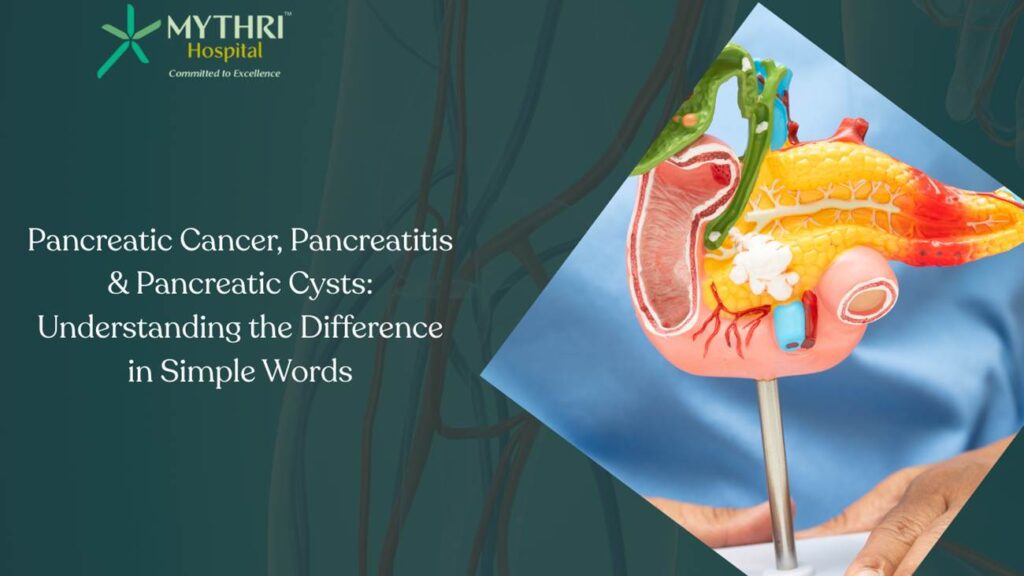
The pancreas is a small but very important organ located behind the stomach. It helps in digesting food and maintaining balanced blood sugar levels.
When the pancreas becomes unhealthy, it can lead to different medical conditions. The three most common pancreatic problems are pancreatic cancer, pancreatitis, and pancreatic cysts.
Although all three affect the same organ, they are very different conditions. This blog explains them in simple words, including their symptoms and key differences.
1. What Is Pancreatic Cancer?
Pancreatic cancer occurs when abnormal cells in the pancreas grow uncontrollably and form a tumor. Over time, these cancer cells may spread to other parts of the body.
One major challenge with pancreatic cancer is that it often develops silently, without early warning signs. Because of this, it is usually diagnosed at a later stage.
Who Is at Higher Risk?
People with the following risk factors have a higher chance of developing pancreatic cancer:
- Smoking
- Regular alcohol consumption
- Long-standing diabetes
- Obesity
- Family history of pancreatic cancer
Common Symptoms of Pancreatic Cancer
- Yellowing of the skin and eyes (jaundice)
- Persistent or severe abdominal pain radiating to the back
- Unexplained weight loss
- Loss of appetite
- Dark-colored urine or pale stools
- Extreme tiredness
Pancreatic cancer is serious because it grows quickly and is often detected late. However, early diagnosis can significantly improve treatment outcomes.
2. What Is Pancreatitis?
Pancreatitis means inflammation of the pancreas. Unlike cancer, it is not caused by abnormal cell growth.
When the pancreas becomes inflamed, it cannot function properly, leading to pain and digestive problems. Pancreatitis can be sudden or long-term.
Types of Pancreatitis
Acute Pancreatitis
This type begins suddenly and causes severe abdominal pain. With proper treatment, most patients recover within a few days.
Chronic Pancreatitis
This is long-term inflammation that keeps recurring or never completely heals. Over time, it can cause permanent damage to the pancreas.
Causes of Pancreatitis
- Gallstones
- Heavy alcohol use
- Certain medications
- High triglyceride levels
- Infection or injury
Common Symptoms of Pancreatitis
- Severe upper abdominal pain radiating to the back
- Nausea and vomiting
- Fever
- Swollen or tender abdomen
- Oily, foul-smelling stools (especially in chronic pancreatitis)
Pancreatitis can range from mild to life-threatening. Severe cases may require hospitalization. However, it is caused by inflammation, not cancer.
3. What Is a Pancreatic Cyst?
A pancreatic cyst is a fluid-filled sac that forms in or on the pancreas. It can be compared to a small water-filled balloon inside the organ.
Most pancreatic cysts are benign and harmless. Many people are unaware they have one because cysts often cause no symptoms. They are usually discovered accidentally during scans done for other reasons.
Can a Pancreatic Cyst Turn into Cancer?
Rarely, some cysts are precancerous and may develop into cancer over time if left untreated. This is why doctors recommend regular monitoring.
Possible Symptoms of Pancreatic Cysts
- Mild abdominal discomfort
- Nausea
- Feeling full quickly while eating
Not all cysts are dangerous, but regular follow-up scans are important in certain cases.
How Are Pancreatic Conditions Diagnosed?
Doctors may use a combination of tests to identify pancreatic disorders, including:
- Ultrasound
- CT scan
- MRI
- Endoscopic ultrasound (EUS)
- Blood tests
- Biopsy (if required)
How Are These Conditions Treated?
Treatment of Pancreatic Cancer
- Surgery (if diagnosed early)
- Chemotherapy
- Radiation therapy
- Immunotherapy
Treatment of Pancreatitis
- Pain-relieving medications
- Intravenous (IV) fluids
- Antibiotics (if infection is present)
- Resting the pancreas (temporary fasting)
- Treating the cause (gallstone removal, avoiding alcohol)
Treatment of Pancreatic Cysts
- Regular monitoring with scans
- Cyst drainage (in selected cases)
- Surgery for high-risk or precancerous cysts
When Should You Go to the Hospital?
Seek immediate medical attention if you experience:
- Severe abdominal or back pain
- Persistent vomiting
- Yellowing of the skin or eyes
- Unexplained weight loss
- Abdominal swelling
- Difficulty digesting food
- Sudden or extreme fatigue
These symptoms do not always indicate cancer, but they should never be ignored.
Conclusion
Pancreatic cancer, pancreatitis, and pancreatic cysts may sound similar, but they are very different conditions.
- Pancreatic cancer involves dangerous abnormal cell growth
- Pancreatitis is inflammation of the pancreas
- Pancreatic cysts are fluid-filled sacs, usually harmless but sometimes risky
Understanding these differences helps in early diagnosis and timely treatment. Since the pancreas plays a vital role in digestion and blood sugar control, taking care of pancreatic health is essential for overall well-being.