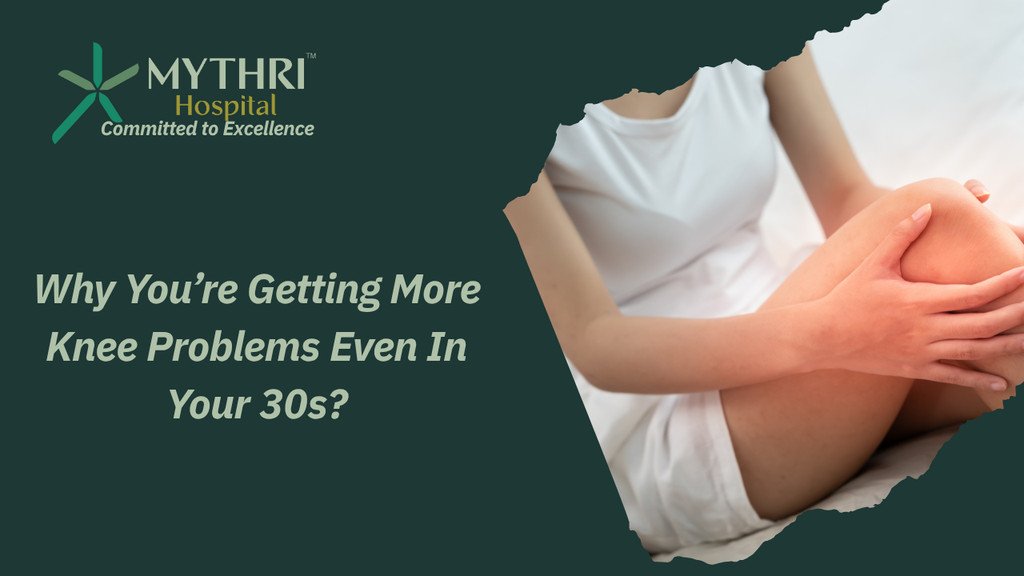
Knee pain was once thought to be an older adult problem. But today, orthopaedic clinics are seeing more patients in their 30s complaining of knee pain, stiffness, swelling and trouble with day-to-day activities. Young adults are experiencing more knee pain from climbing stairs, exercising or sitting for too long.
So, why do knee problems occur early? The answer is a combination of modern living habits, increasing physical demands and underlying medical conditions. Finding out the cause can help you make changes to protect your joints before they get worse.
Why do young people suffer from knee pain?
Your knees are one of the busiest joints in your body. They support your weight, absorb shock and let you walk, run, jump and climb. Over time, repeated stress or injury can damage the cartilage, ligaments, muscles, and bones around the knee.
There are several lifestyle factors that are responsible for the increase in knee problems in people over the age of 30.
1. Not enough exercise
Most people spend long periods of time either sitting at a desk on a computer or in a car . The muscles that support the knee like the quadriceps and hamstrings get weaker if you don’t get up and walk around regularly.
If your muscles aren’t strong enough, they will stress your knee joint and increase the chance of pain or injury.
2. Extra weight
Each extra kilo of body weight puts a tremendous strain on the knee joints when walking, climbing stairs or running. The extra weight speeds up the wear and tear of the cartilage and the risk of premature osteoarthritis.
One of the best things you can do for your knees is to stay at a healthy weight.
3. Poor Performance of High Impact Exercises
Running, jumping, weight lifting and high intensity training are all the rage. Exercise is good but bad technique, not warming up or overtraining can put stress on the knee joint and ligaments around the knee.
But pushing through pain and carrying on with strenuous workouts can turn small injuries into more.
4. Injuries in sports
Football, badminton, cricket, basketball and other sports are more common among young adults, who suffer from meniscus tears, ligament injuries and tendon problems.
If not treated, these injuries can cause chronic knee joint pain and instability.
5. Poor posture & muscular imbalance
Poor posture, weak hips, tight hamstrings and poor body mechanics can all impact how forces are transmitted through the knee joint.
As time goes by, these imbalances put more and more strain on the knees and cause pain with everyday tasks.
6. Vitamins & Bone Health
A deficiency of vitamin D and calcium is very common and can affect bone strength and muscle function. While they don’t cause pain themselves, they can lead to muscle weakness, tiredness and longer recovery times after an injury.
“These deficiencies can be treated and managed through a balanced diet and regular health checks.
What to Watch For?
Knee problems usually start with a mild discomfort that worsens with time.
Common symptoms may include:
Pain ascending or descending stairs
4. Stiffness after long sitting
- Knee swelling
- Popping or crackling noises
- Trouble squatting or kneeling
- The knee feels like it’s going to “give up”
- Limited range of movement
If your symptoms persist, or begin to interfere with your day to day life, do not ignore them.
How to protect your knees?
Some simple lifestyle changes can help you avoid knee problems.
- Maintain your activity levels by engaging in low-impact exercises, such as walking, swimming, or cycling.
- Supervised exercises for muscles around the knees.
- Maintain a healthy weight.
- Warm up before you work out, and stretch after.
- Exercise in supportive footwear.
- Don’t increase intensity of your workout suddenly.
- Eat a healthy diet full of calcium, protein and Vitamin D.
- If you have pain that won’t go away, listen to your body and rest.
When Should You See an Orthopedic Specialist?
See a doctor for knee pain when:
- If it continues to have redness or swelling more than a few weeks
- hard to walk happens after an injury
- Causes locking or buckling of the knee
Early assessment may include a physical exam and X-rays or an MRI to look for ligament injuries, damaged cartilage or early arthritis. If treated early this disease does not often progress.
Summary
Knee problems are no longer just an older adult problem. Knee pain is becoming more common in people in their 30s. This can be caused by a sedentary lifestyle, obesity, sports injuries, poor posture and overtraining. The good news is that many of these problems can be avoided with regular exercise, weight control, proper training techniques and prompt medical attention.
If your knee pain is interfering with daily activities, don’t ignore it. See an orthopedic specialist soon to get a diagnosis, relieve the pain and keep you moving for years to come.