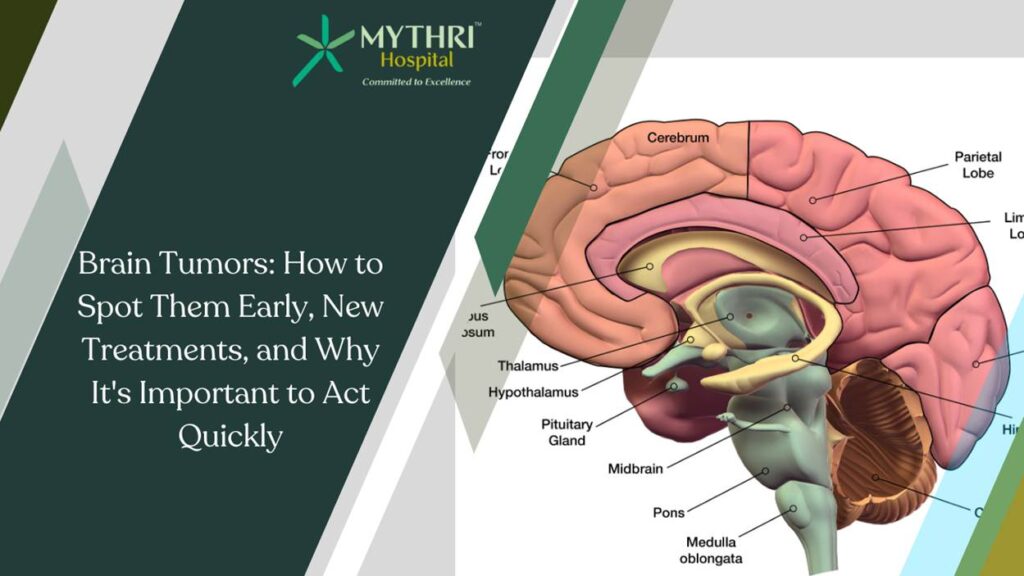
Fear, confusion, and myths often surround brain tumors. A lot of people think that brain tumor are always deadly or can’t be treated. The truth is very different. With early diagnosis and modern medical advances, many brain tumors can be treated effectively, and patients can lead meaningful lives.
Outcomes are changing because more people are aware of them, imaging is getting better, and neurosurgical techniques are getting better. But only if symptoms are caught early.
What is a tumor in the brain?
A brain tumor is a growth of cells that shouldn’t be there in the brain or the tissues around it. These tumors can be:
- Benign (non-cancerous) – slow-growing but can still cause serious symptoms due to pressure on the brain
- Malignant (cancerous) means it grows quickly and is aggressive.
- Both kinds need to see a doctor right away.
Why Brain Tumors Are Becoming More of a Health Problem?
More people are being diagnosed with brain tumors these days because of:
- Easier access to CT and MRI scans
- More people are aware of neurological symptoms.
- Longer life expectancy
- They can hurt people of all ages, even kids and teens.
Early Signs of Brain Tumors
Symptoms depend on the tumor’s size, type, and location, but some common warning signs include:
- Persistent headaches, especially worse in the morning
- Headaches that make you feel sick or throw up
- Sudden vision problems
- Seizures, especially in adults who have never had them before
- Weakness or numbness in the arms or legs
- Having trouble speaking or understanding speech
- Changes in personality or memory issues
Not being able to keep your balance or coordinate your movements
Not every headache means you have a brain tumor, but you should never ignore neurological symptoms that don’t go away or get worse.
Signs of Brain Tumors in Kids That Parents Should Look Out For
In kids, the symptoms may be different and include:
- Repeated vomiting without stomach illness
- Bad grades in school
- Changes in behavior
- Hard time walking
- Bigger heads in babies
- Finding the disease early in children makes treatment much more effective.
How doctors find out if someone has a brain tumor?
Diagnosis usually involves:
- Thorough neurological examination
- Imaging tests like a CT scan or MRI
- Advanced scans to learn how tumors act
- In some cases, a biopsy is needed to find out what kind of tumor it is.
- Doctors can choose the best treatment plan if they catch the disease early and correctly.
New ways to treat brain tumors
Modern medicine has changed how brain tumors are treated. The type, size, location, and health of the patient all affect how the tumor is treated.
1. Advanced Neurosurgery
Brain surgeries that are done today are:
More exact
More secure
Often not very invasive
Surgeons can remove tumors while keeping healthy brain tissue safe with the help of advanced imaging and navigation systems.
2. Radiation Treatment
Radiation focuses on tumor cells and does as little damage as possible to nearby brain tissue. Newer methods make it possible:
More precise
Less side effects
Better control of tumors
3. Chemotherapy and Targeted Therapy
These days, drugs can:
Slow down the growth of tumors
Aim for certain tumor cells
Enhance longevity and life quality
Some treatments are based on the genetics of the tumor.
4. Care from many fields
A lot of the time, brain tumor treatment includes:
Neurologists
Neurosurgeons
Oncologists
Experts in rehabilitation
This method of working together as a team leads to better results and faster recovery.
After Treatment for a Brain Tumor
Recovery does not end with treatment. Rehabilitation is very important and may include:
Therapy for the body
Therapy for speech
Rehabilitation for cognitive functions
Help with mental health
Many patients go back to work and their daily lives after getting the right follow-up and support.
Breaking Common Myths About Brain Tumors
Myth: Every brain tumor is cancer
Fact: Most brain tumors are not cancerous and can be treated.
Myth: Surgery always hurts the brain
Fact: Safety and accuracy are the main goals of modern surgery.
Myth: Brain tumors always cause very bad headaches
Fact: Symptoms vary and may be subtle in early stages
When is it time to see a doctor?
If you or someone you care about has any of the following, get medical help right away:
- New seizures
- Neurological symptoms that won’t go away
- Headaches that get worse over time
- Problems with speech or vision that come on suddenly
- Getting help early can save your life.
Last Message
Brain tumors are bad, but they don’t always mean the end of your life. Every year, thousands of patients’ lives are changing because of more awareness, earlier diagnoses, and better medical care.
It’s important to pay attention to your body, take symptoms seriously, and get medical help when you need it. When it comes to brain tumors, acting quickly can save lives and improve quality of life.